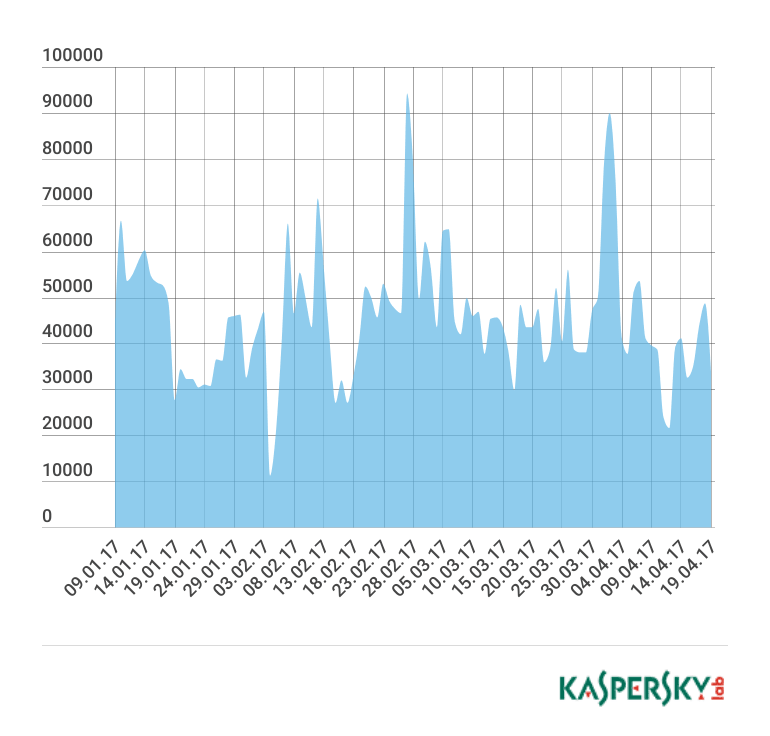
According to Gartner, there are currently over 6 billion IoT devices on the planet. Such a huge number of potentially vulnerable gadgets could not possibly go unnoticed by cybercriminals. As of May 2017, Kaspersky Lab’s collections included several thousand different malware samples for IoT devices, about half of which were detected in 2017.
По данным Gartner в мире сейчас насчитывается более 6 миллиардов «умных» устройств. Такое количество потенциально уязвимых гаджетов не осталось незамеченным злоумышленниками: по данным на май 2017 года в коллекции «Лаборатории Касперского» находилось несколько тысяч различных образцов вредоносного ПО для «умных» устройств, причем около половины из них были добавлены в 2017 году.
A distributed denial-of-service (DDoS) attack is one of the most popular tools in the cybercriminal arsenal. The motives behind such attacks can vary – from cyber-hooliganism to extortion. There have been cases where criminal groups have threatened their victims with a DDoS attack unless the latter paid 5 bitcoins (more than $5,000). Often, a DDoS attack is used to distract IT staff while another cybercrime such as data theft or malware injection is carried out.